The torch was lit this week. Not with much fanfare outside Japan, admittedly, but from 18 August the flame began its journey through Tokyo and Hiroshima before a month-long relay carries it into Nagoya, and roughly a thousand torchbearers get to have the best day of their year.
On 19 September the 20th Asian Games open at Paloma Mizuho Stadium. Sixteen days, 45 nations, 43 sports, 469 medal events. And unlike most multi-sport events that arrive with a shrug, this one has genuine consequences attached.
The Basics, Because Nobody Remembers Them
Aichi-Nagoya 2026 runs from 19 September to 4 October across Aichi Prefecture, with Nagoya as the main host city. It is Japan’s third time staging the Games after Tokyo in 1958 and Hiroshima in 1994, and the closing ceremony will hand the flag on to Doha for 2030.
The motto is Imagine One Asia. The mascot is Honohon, designed around the shachihoko, the golden fish that sit on the roof of Nagoya Castle. It is, and I mean this kindly, a very Japanese mascot: slightly odd, immediately memorable, and destined to be the most photographed thing at the entire Games.
Six sports make their Asian Games debut here: freestyle BMX, mixed martial arts, padel, surfing, teqball and virtual taekwondo. Yes, virtual taekwondo. No, I am not going to pretend I know how to score it. Esports returns with eleven medal events, which will annoy exactly the people you expect it to annoy.
Some venues are recycled from the Tokyo 2020 Olympics, and swimming has been shifted to the Tokyo Aquatics Centre after concerns about the original pool. The budget has followed the usual trajectory for these things: an early estimate of about 85 billion yen had climbed past 140 billion by the time the bills were properly counted.
Hockey Is Not a Medal Event. It Is a Plane Ticket
Here is the part that changes how you watch this tournament. The winner of the men’s hockey gold medal match qualifies directly for the Los Angeles 2028 Olympics. Not a ranking boost. Not a better seed at some qualifier next spring. A guaranteed place.
India defend the title they won in Hangzhou, with Harmanpreet Singh continuing as captain and Manpreet Singh, the squad’s most-capped player, still in the engine room of a 20-man group. Head coach Craig Fulton has been blunt about the framing, saying the team looks forward to playing in Japan “where the winner qualifies for the LA 2028 Olympics.” There is no diplomatic way to dress that up. Win it, or spend the next eighteen months grinding through qualifiers.
India are in Pool A alongside hosts Japan, Korea, Bangladesh, Sri Lanka and Indonesia, opening against Indonesia on 20 September at the Gifu Prefectural Green Stadium. The pool should be navigable. The knockout rounds, with Korea and a Japan side playing at home in front of their own crowd, are where a campaign either holds together or falls apart in ten minutes of a shoot-out.
Cricket Suddenly Matters an Enormous Amount
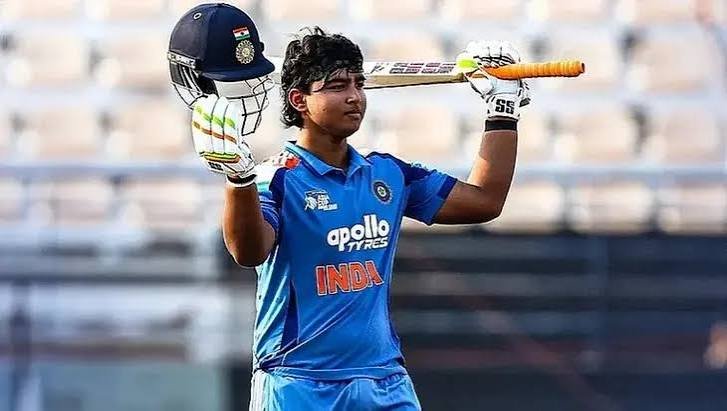
Cricket appears at the Asian Games for the fourth time, with men’s and women’s Twenty20 tournaments running from 17 September to 3 October at Kōrogi Sports Park. Ten men’s teams, eight women’s teams, Japan in as hosts, the rest arriving through direct qualification or through qualifiers staged in Singapore and Malaysia.
Historically this has been a curiosity, a tournament played by second-string sides while the serious cricket happened elsewhere. Not this time. Aichi-Nagoya doubles as the Asian qualifying event for cricket at the 2028 Olympics, which means a format that boards have traditionally treated as an afterthought now decides who gets to play for a gold medal in Los Angeles.
India are defending champions in both the men’s and women’s events. Seedings come off the ICC T20I rankings, and the structure runs through preliminary rounds into quarter-finals, semi-finals and a final. Expect selection debates, expect scheduling arguments, and expect at least one associate nation to ruin somebody’s week. That is the best thing about cricket in this format.
India Arrive Carrying a Number
One hundred and seven. That is what India managed at Hangzhou, the first time the country cleared a hundred medals at an Asian Games, and it has quietly become the benchmark everything is measured against.
The reliable ground is familiar: shooting, archery, badminton and wrestling remain the sports where India converts depth into podiums. Athletics is the interesting one, with genuine strength now spread across javelin, race walking and the sprints rather than resting on one or two names.
The broader argument being made in Indian sport at the moment is that these Games function as a system test rather than a talent test. Moving several hundred athletes and support staff across a foreign country, keeping them healthy and peaking on the right day, is an administrative exercise as much as an athletic one, and it happens to be exactly the kind of exercise a country pursuing a 2036 Olympic bid needs to prove it can pass.
Beating 107 will be hard. New sports dilute some of the traditional strongholds, and China will do what China always does at the top of the table. But the medal count is the least interesting number attached to this trip.
Key Dates Worth Putting in Your Calendar
- 18 to 20 August: torch relay begins in Tokyo and Hiroshima
- 22 August to 18 September: nationwide torch relay across Japan
- 17 September: cricket tournaments begin at Kōrogi Sports Park
- 19 September: opening ceremony, Paloma Mizuho Stadium, Nagoya
- 20 September: India open their men’s hockey campaign against Indonesia
- 3 October: cricket finals
- 4 October: closing ceremony and handover to Doha 2030
What I Will Actually Be Watching
The hockey. All of it. A single-elimination route to an Olympic place produces a specific kind of tension that a league season never quite manages, and India, Korea and Japan are close enough that one deflection decides the whole thing.
After that, the new sports, out of pure curiosity. Padel has grown at a genuinely absurd rate over the last few years and this is its biggest continental stage yet. Surfing in Japan is worth watching for the setting alone. And whatever virtual taekwondo turns out to be, several million people are about to find out at the same time.
Sixteen days, forty-three sports, and a handful of results that will still matter in the summer of 2028. That is a better return than most Septembers offer.
Frequently Asked Questions
When and where are the 2026 Asian Games?
The 20th Asian Games run from 19 September to 4 October 2026 in Aichi Prefecture, Japan, with Nagoya as the main host city. It is Japan’s third time hosting the event.
How many sports and events are on the programme?
There are 469 medal events across 43 sports, with all 45 National Olympic Committees of the Olympic Council of Asia expected to take part.
Which new sports are being added?
Freestyle BMX, mixed martial arts, padel, surfing, teqball and virtual taekwondo all make their Asian Games debut. Esports returns with eleven medal events.
Does the Asian Games affect Olympic qualification?
Yes. The men’s hockey winner qualifies directly for the Los Angeles 2028 Olympics, and the cricket tournament serves as the Asian qualifying event for cricket at the same Games.
How did India perform at the last Asian Games?
India won 107 medals in Hangzhou, the country’s first hundred-medal haul at an Asian Games, and enter Aichi-Nagoya with shooting, archery, badminton, wrestling and athletics as the core medal sports.
Where will the 2030 Asian Games be held?
Doha, Qatar, with the handover taking place at the closing ceremony in Nagoya on 4 October 2026.
Add Comment