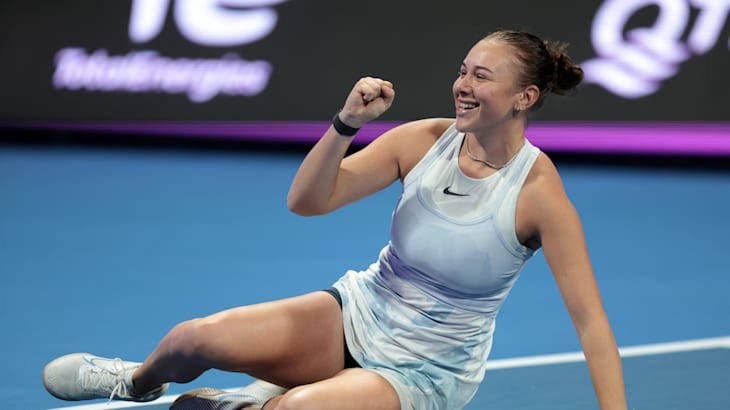
Women's tennis regularly produces draws in which several players have a realistic path to the title. Different surfaces reward different strengths, younger players improve quickly and established champions can be challenged in the opening week of a major. That uncertainty makes the tour compelling.
Men's tennis has moved toward a clearer centre led by Jannik Sinner and Carlos Alcaraz, although major breakthroughs still occur. The question is whether competitiveness means greater depth, more title winners or simply less predictability. Each definition creates a different answer.
The WTA has strength beyond the top few
Powerful servers, elite defenders and creative all-court players are spread throughout the rankings. A seeded player can face a dangerous stylistic match-up immediately. This depth means form and conditions often matter as much as ranking position.
Uncertainty is not the same as inconsistency
Surprise results are sometimes described as evidence that leading women lack control. That interpretation can undervalue the quality of their opponents. When the overall standard rises, dominant seasons become harder even for outstanding champions.
The ATP has a clearer headline rivalry
Sinner and Alcaraz have accumulated major titles and created repeated expectations around the later stages. That concentration provides an easy narrative for supporters. Yet Novak Djokovic, Alexander Zverev and emerging players continue to complicate the idea of a closed field.
Different competitive models can both succeed
A tour can thrive through several plausible champions or through a great rivalry supported by strong challengers. Women's tennis currently offers broader week-to-week uncertainty, while men's tennis has a more defined battle at the summit. Neither structure is automatically superior.
Final assessment
Women's tennis can reasonably be described as more competitive in terms of depth and unpredictability. Men's tennis currently offers a stronger concentration of repeat major winners at the top. The comparison depends on the chosen measure, but both tours provide demanding and credible competition.
Frequently asked questions
Does having more winners mean a tour is stronger?
Not by itself. It can reflect depth, changing form or the absence of one dominant player.
Why are WTA draws difficult to predict?
Many players possess elite weapons, and surface or match-up differences can quickly change the balance.
Add Comment