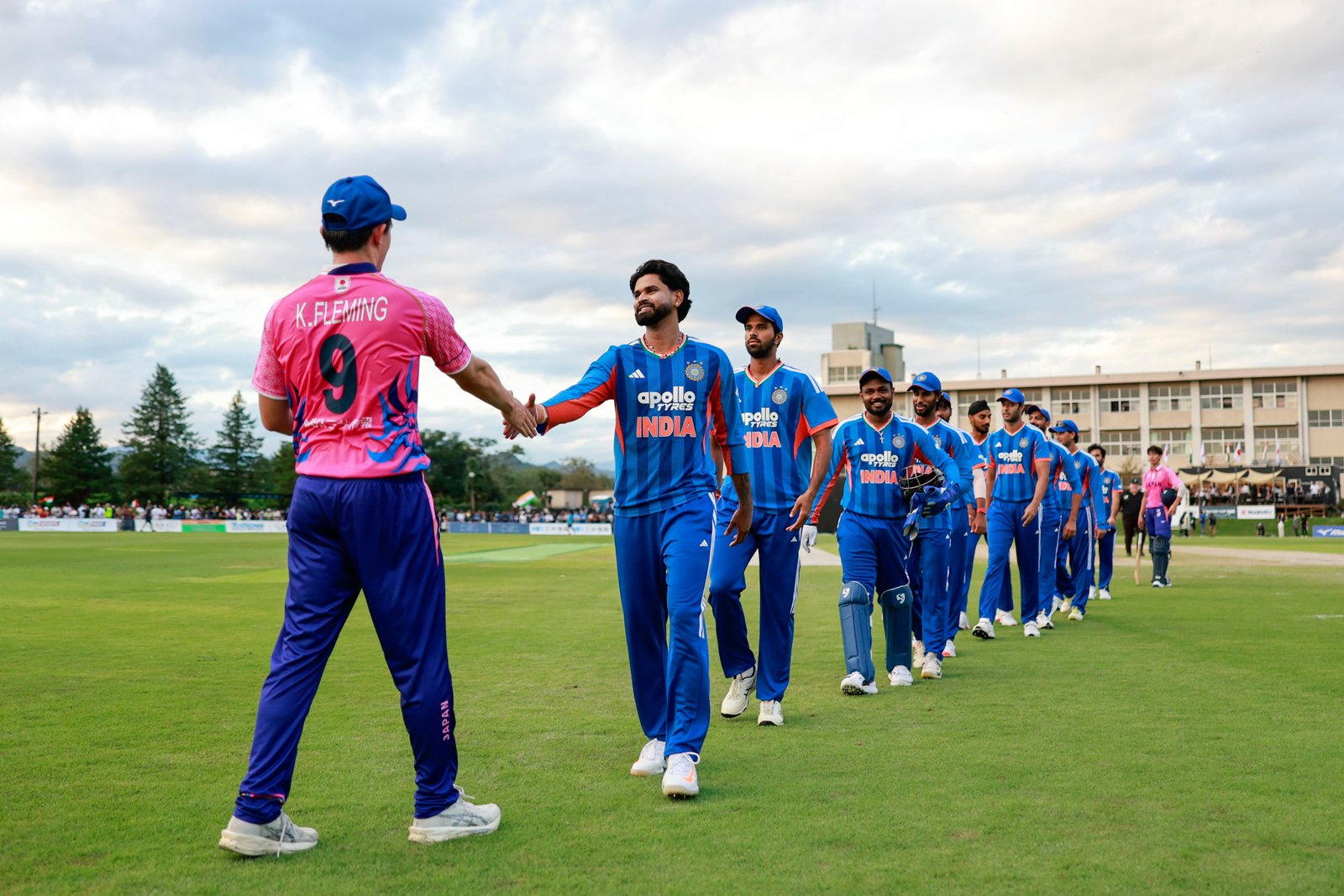
Given the heavy amount of rain a day before in Sano, play was looking highly unlikely for a major part in the historic inauguration of the Suzuki Cup – to strengthen the sporting ties between India and Japan. The ground was extremely damp and the fears of a washout were pretty high. However, kudos to both the captains, especially the Indians, who agreed to play a 5-over contest, the bare minimum to constitute a T20 international.
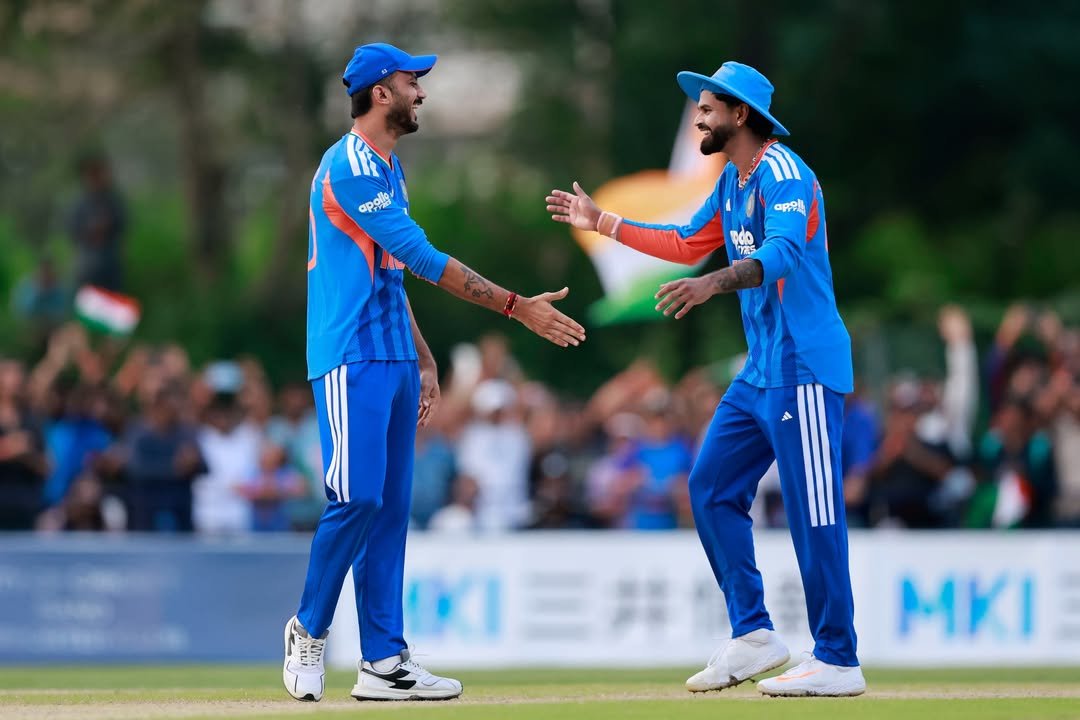
India elected to bat first on what looked like an extremely slow pitch. The ball barely came onto the bat, and spun a mile. The highly-famed Indian batting lineup could pull up only a solitary batter in double digits with just 2 fours in their whole innings!
The star-studded top three of Abhishek Sharma, Sanju Samson and Ishan Kishan barely contributed with Abhishek registering his 8th duck in 59 innings, and his 5th golden one. Skipper Shreyas’ watchful 16 (12) took the Indians to 32/4, which seemed extremely modest at the halfway mark.
Japan showed why they were pumped up for this fixture, with each of the three bowlers in Hara-Hinze, Takahashi and Ito-Davis keeping India honest. Only one over went in double digits, the fifth, registering 10 and that probably was the turning point – but irrespective, the hosts were all over India with the ball.
In a normal T20 scenario, 33 should not have been too difficult to chase down. But the home side’s batters too, struggled. Still, with 8 runs needed in the final over, and 7 wickets in hand, the hosts would have still considered themselves as favourites.
And this is where, controversy came in. There were two wides signalled in the last over bowled by Axar Patel. Shirai-Patmore tried to reverse-sweep the second wide ball, but missed, as the ball was fired down the leg side. Now, initially, umpire Chris Thurgate stretched his arms, signalling a wide. That irked the Indian players, with skipper Shreyas Iyer immediately walking up to complain.
With the wide already being signalled, the senior umpire Chris Brown, standing at square leg, immediately took notice of Iyer’s complaint and suggested his partner to withdraw the decision. The wide signal was revoked and it proved highly pivotal, as Axar ended his over with just 4 singles and a wide.
India scraped home by 2 runs and registered their 200th win in T20Is, the first team to this milestone. However, that last-over controversy sort of marred this historic match and the achievement. The questions were – Was the right decision made? Eventually, yes. The second one was not a wide. Isn’t the umpire’s decision final? Yes again. But if the umpire realizes or is helped in realizing that a wrong call was made, the decision can always be changed.
As they say, to err is human, but to forgive is divine. May this match be remembered more for Japan's terrific fight, rather than the controversial wide.
Add Comment