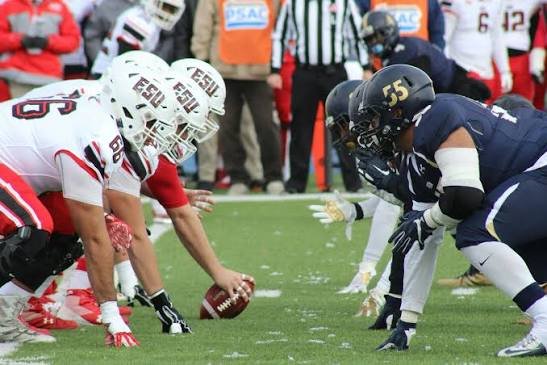
Analytics has changed how NFL teams discuss fourth downs, play selection, clock management and player value. Decisions once defended through instinct can now be compared with thousands of similar situations. That shift sometimes makes football appear like a calculation performed before the players arrive.
The game remains far less certain than a probability chart suggests. Coaches must account for injuries, weather, match-ups and the emotional state of a team. Data improves the starting point, but it cannot experience the pressure of the moment.
Probabilities challenge traditional caution
Many coaches historically punted or kicked because failure on fourth down attracted more criticism than a passive decision. Analytics showed that aggression can improve expected outcomes. That information did not remove courage; it revealed where conventional fear had shaped strategy.
Models cannot contain every detail
A general recommendation may not reflect a struggling offensive line, an injured quarterback or a specific defensive weakness. Teams need analysts who communicate uncertainty rather than presenting one number as a command. Context remains a coaching responsibility.
Players still decide the result
A model can recommend a play, but execution depends on technique, communication and competitive nerve. The emotional force of football appears when athletes respond to risk. Better information can make those moments more meaningful because the team understands why the risk was chosen.
Communication determines public acceptance
Fans become frustrated when a coach hides behind percentages after a failure. Explaining the tactical reasoning creates a more honest discussion. Analytics should expand accountability, not become a shield against it.
Final assessment
Analytics has not removed emotion from football. It has exposed assumptions and encouraged more informed aggression. The strongest teams combine evidence with observation and leadership, recognizing that probabilities guide a decision while human performance still determines its outcome.
Frequently asked questions
What NFL decisions are commonly influenced by analytics?
Fourth-down attempts, two-point tries, clock strategy, play selection and roster construction all use quantitative analysis.
Should coaches always follow the model?
No. They should understand the recommendation and adjust for reliable game-specific information.
Add Comment