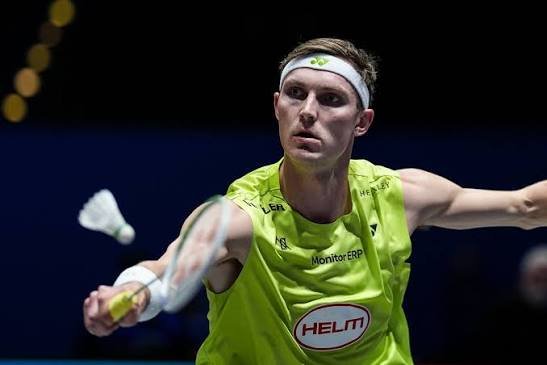
Viktor Axelsen's extended periods at the top of men's singles have encouraged an inevitable argument about competition. When one player wins repeatedly, observers often conclude that the era must be weak. That explanation is attractive because it makes dominance easier to understand.
It also overlooks what elite consistency requires. Modern badminton involves dense travel, varied conditions and opponents who study every pattern. Axelsen's success has depended on maintaining physical, technical and tactical advantages while the field continuously searches for solutions.
The previous era created a difficult comparison
Axelsen followed a period associated with Lin Dan, Lee Chong Wei and Chen Long, three players whose rivalries shaped expectations for men's singles. Any later champion would be measured against that concentration of established greatness, even if the modern field contains greater depth beyond the leading names.
His physical profile is only one advantage
Height and reach allow Axelsen to attack steeply and cover the net, but those qualities require efficient movement. His base position, shot selection and patience prevent opponents from exploiting his size. Reducing his career to physical superiority ignores the technical work supporting it.
The field has produced meaningful resistance
Players from Asia and Europe have challenged Axelsen with speed, deception and relentless defence. Injuries and form changes have also interrupted his control. The fact that he repeatedly rebuilt his game is evidence of a demanding era rather than proof that competition disappeared.
Dominance can make opponents look weaker
A champion who controls important matches changes how rivals are remembered. Close challengers may be described as ordinary because they did not collect the same titles. That circular argument risks using Axelsen's excellence as evidence against the quality of his achievements.
Final assessment
Axelsen has competed in a different era, not clearly an easier one. The absence of another rivalry matching badminton's most famous pairings affects perception, but sustained dominance still demands exceptional preparation. His record should be evaluated through the problems he solved, not through nostalgia alone.
Frequently asked questions
Why is Axelsen so difficult to play?
His reach, attacking angles, movement efficiency and tactical patience allow him to control rallies from several positions.
Can eras in badminton be compared directly?
Only with caution, because scoring systems, schedules, equipment and the depth of international competition change.

Add Comment